
Category: Traffic Control Plans
-
One Fiber Route, Multiple Jurisdictions: Managing TCPs Across Colorado’s Front Range
A middle-mile fiber route may look like a simple line on a construction map. But from a permitting and traffic control standpoint, it can be anything but simple A telecom build along Colorado’s Front Range can move from one municipality into another, cross county right-of-way, intersect a CDOT highway, and pass through everything from residential…
-
Why Some Jurisdictions Require Satellite Imagery Traffic Control Plans Instead of Traditional Drafted TCPs
Understanding the Requirements Behind Modern Traffic Control Plan Reviews If you’ve submitted Traffic Control Plans (TCPs) in multiple jurisdictions, you’ve probably noticed that permit requirements can vary significantly from one agency to another. While some municipalities and transportation departments prefer traditional drafted plans based on engineering drawings, others increasingly require TCPs to be developed using…
-
Traffic Control Plans for FTTH Projects: What OSP Engineers Need to Know About Permitting
As Fiber-to-the-Home (FTTH) deployments continue to expand across the United States, engineering firms, broadband providers, and telecom contractors face increasing pressure to deliver projects on aggressive schedules while navigating complex municipal permitting requirements. Whether a project involves directional boring, conduit installation, aerial fiber placement, handhole construction, or network maintenance, work occurring within the public right-of-way…
-
Traffic Control for Colorado Mountain SUE Operations: What Engineers and Contractors Need to Know
Every spring across Colorado’s mountain corridors, survey crews and Subsurface Utility Engineering (SUE) teams start preparing the ground for the summer construction season. Before paving crews arrive or utility replacements begin, engineers and contractors rely on SUE work—vac trucks, potholing crews, and utility locators—to safely map underground infrastructure. But in the Colorado mountains and across…
-
Sidewalk Closures in Denver: Pedestrian Detours, ADA Basics, and Common Field Mistakes
Sidewalk closures are a routine part of construction in Denver, but they are rarely simple. In dense corridors and active neighborhoods, pedestrian impacts carry the same weight as lane closures. If a sidewalk is blocked, the city expects a safe, accessible alternative that is clearly documented in a Denver sidewalk closure traffic control plan. Yes,…
-
One-Lane vs Two-Lane Closures in Denver: Equipment, Staffing, and Typical Permit Conditions
If you’re planning work in the Denver right-of-way, lane closures are often the difference between a smooth permit process and a project that gets delayed before crews ever mobilize. A lane closure permit in Denver is not just a formality. The City will typically expect a traffic control plan (TCP) that matches the scope of…
-
Traffic Control Plans for Colorado ROW Construction
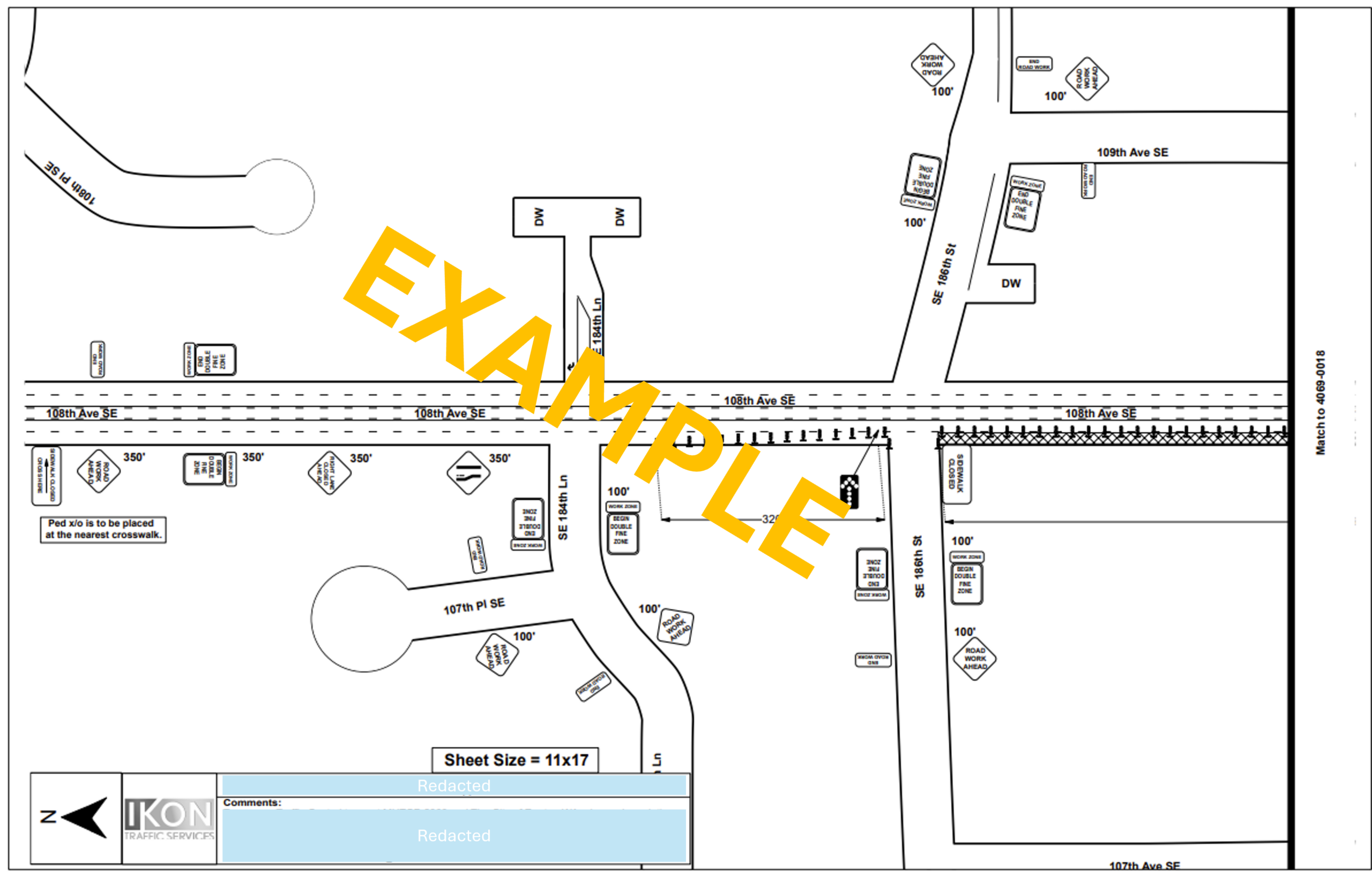
A Traffic Control Plan (or TCP) is a site-specific diagram that shows how vehicles, bicycles, and pedestrians will safely navigate around a construction zone. TCPs follow the standards set by the Manual on Uniform Traffic Control Devices (MUTCD) and are typically required by cities, counties, or CDOT as part of the permitting process. A TCP…
-

Denver Flaggers and Traffic Control Plans
Sometimes to complete construction projects traffic cannot be controlled with just cones and signs. This is where you will need flaggers to help with the flow of traffic. Flaggers will be at all ends of the work zone that traffic may come from. The flaggers will have a sign that will either read “STOP” or…
-

Colorado Department Of Transportation CDOT TCPs
The Colorado Department of Transportation (CDOT) oversees the fastest (and therefore most dangerous) roadways in Colorado, so they require specific CDOT TCPs for construction on the roads they control. Introduction to CDOT TCPs If you ever find yourself needing to do work on any of the interstates, U.S. highways, toll roads, and numbered state highways…
-

Colorado Traffic Control Plans
Ikon Traffic Services produces Colorado Traffic Control Plans for right of way contractors across the Denver Metro Area Overview of traffic control considerations in Denver, Colorado Colorado is a Fast-advancing state in constant growth. Not only is it heavily populated but it is also one of the top vacation destinations for the rest of the…