
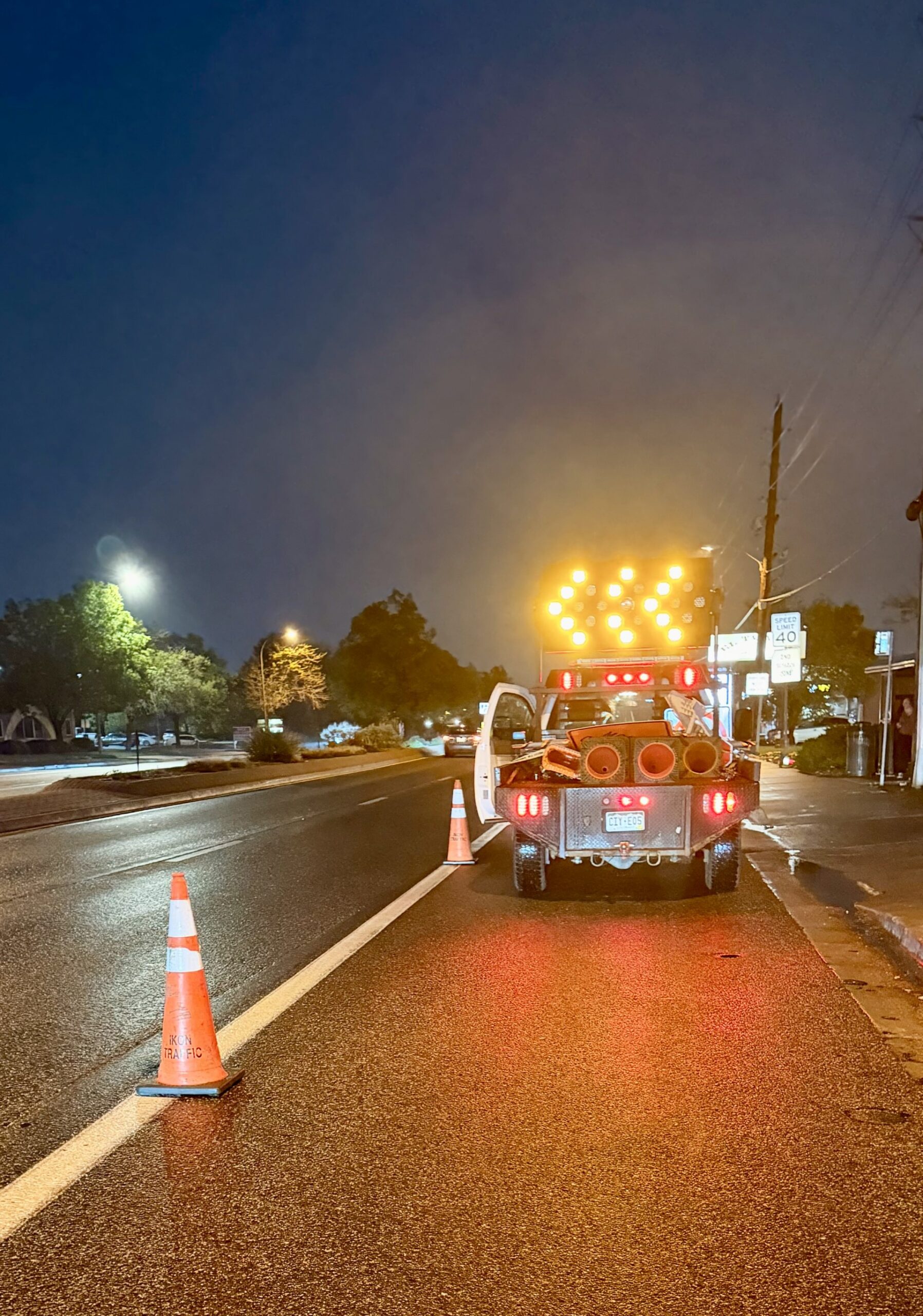
Spring and early summer are when roadwork ramps up across the Front Range. From fiber installs along Colfax to utility trenching in Aurora and asphalt repairs in Lakewood, contractors across the Denver metro are mobilizing crews as municipalities push infrastructure projects into full swing.
But one issue continues to slow projects down before crews even touch the pavement: traffic control.
For contractors working in or near public roadways, lane closures and certified flagging operations are not optional. They are required for permit compliance, worker safety, and maintaining traffic flow around active work zones. And in Colorado, municipalities are paying closer attention than ever to whether contractors have the correct traffic control plans and trained personnel in place.
If your project involves shoulder work, lane reductions, sidewalk closures, rolling closures, or utility work inside the public right-of-way, here’s what you need to know before work begins.
Why Traffic Control Planning Matters Before Mobilization
One of the most common mistakes contractors make is treating traffic control as a last-minute scheduling item.
In reality, traffic control affects nearly every part of a roadway project:
- Permit approval timelines
- Crew scheduling
- Public safety compliance
- Inspection readiness
- Construction sequencing
- Emergency access requirements
- Liability exposure
Across the Denver metro, cities including Denver, Aurora, Lakewood, Thornton, and Arvada require approved traffic control measures before work can begin in the public right-of-way. In many cases, permits are delayed because contractors do not submit compliant traffic control plans (TCPs) or fail to coordinate lane closure requirements early enough.
For civil construction project managers, that delay can quickly turn into idle excavation crews, rescheduled subcontractors, and missed deadlines.
Common Projects That Require Lane Closures in Denver
Many contractors assume lane closures only apply to major roadway reconstruction. In practice, even relatively small projects may require active traffic control support.
Typical projects that often require lane closures or flagging services include:
- Underground utility installation
- Fiber optic construction
- Hydrovac and daylighting operations
- Asphalt patching and paving
- Sidewalk and ADA ramp work
- Stormwater repairs

- Traffic signal work
- Curb and gutter replacement
- Concrete delivery staging
- Emergency utility repairs
On narrow Front Range corridors, even a parked utility truck can create visibility or traffic flow concerns that require temporary traffic control.
In dense areas like downtown Denver, Cherry Creek, or along busy commuter corridors such as Federal Boulevard, Hampden Avenue, and Colorado Boulevard, municipalities may also require additional pedestrian safety measures, advanced warning signage, or off-peak work windows.
Understanding the Difference Between Lane Closures and Flagging Operations
Not all work zones are managed the same way.
Lane Closures
Lane closures are used when part of the roadway must be restricted or blocked off to safely perform work. Depending on the roadway type, closures may involve:
- Cones and channelizing devices
- Arrow boards
- Temporary signage
- Taper setups
- Truck-mounted attenuators (TMAs)
- Pedestrian detours
- Work zone barriers
Lane closure setups must typically follow MUTCD standards and local municipal requirements.
Flagging Services
Flagging operations are used when traffic must alternate through a work zone or when workers need active control over vehicle movement.
Certified flaggers are especially common during:
- Single-lane alternating traffic operations
- Utility crossings
- Short-duration closures
- Residential roadway work
- Mountain corridor construction
- Emergency repair work
Professional flagging crews do more than hold signs. Experienced flaggers help maintain safe traffic flow, communicate with construction crews, identify unsafe driver behavior, and reduce the risk of work zone incidents.
Why Certified Flaggers Matter on Colorado Projects
Colorado work zones present unique challenges compared to many other states.
Contractors regularly deal with:
- High traffic speeds on Front Range arterial roads
- Aggressive commuter traffic during peak hours
- Rapid weather changes
- Narrow urban corridors
- Heavy commercial vehicle traffic
- Pedestrian and cyclist interactions
- Limited visibility in mountain or foothill corridors
Because of these conditions, experienced traffic control personnel become a critical part of maintaining both worker safety and project efficiency.
A properly staffed work zone helps reduce:
- Near misses
- Public complaints
- Inspector violations
- Work stoppages
- Unsafe driver interactions
- Delays caused by traffic backups
For many contractors, outsourcing traffic control also allows field crews to focus on production rather than attempting to manage roadway safety internally.
What Contractors Need Before Requesting a Lane Closure
Before scheduling traffic control services, contractors should gather several key project details.
The more information provided upfront, the smoother the mobilization process becomes.
Typical information traffic control providers will need:
- Project address or corridor limits
- Scope of roadway work
- Number of lanes affected
- Anticipated work hours
- Expected project duration
- Municipality jurisdiction
- Existing permit requirements
- Traffic volume considerations
- Pedestrian impacts
- Emergency access concerns
If traffic control plans are required, contractors should also determine whether stamped TCPs or engineered drawings are needed for permit submission.
Many municipalities throughout the Denver metro have different submittal standards, which is why working with a local provider familiar with Colorado jurisdictions can significantly reduce delays.
The Role of Traffic Control Plans (TCPs)
A traffic control plan serves as the blueprint for how traffic will safely move around a work zone.
A compliant TCP typically identifies:
- Sign placement
- Cone spacing
- Taper lengths
- Work area dimensions
- Lane configurations
- Pedestrian routing
- Buffer zones
- Equipment placement
- Temporary traffic patterns
For contractors working across multiple municipalities, keeping up with changing requirements can become time-consuming.
Denver, Aurora, and CDOT projects may each have different expectations regarding:
- Approved lane closure windows
- TMA requirements
- Detour standards
- Pedestrian accommodations
- Inspection procedures
- Permit lead times
Submitting incomplete or non-compliant traffic control plans can push projects back days or even weeks.
Why Denver Contractors Are Outsourcing Traffic Control More Often
Over the last several years, many Colorado contractors have shifted away from handling traffic control internally.
The reasons are practical.
Maintaining an in-house traffic control division requires:
- Certified personnel
- Specialized vehicles
- Sign inventories
- MUTCD training
- Ongoing compliance management
- Scheduling coordination
- Equipment maintenance
For most civil contractors, traffic control is necessary but not core to their primary business.
By partnering with a dedicated traffic control company, contractors gain access to experienced crews, compliant work zone setups, and scalable support without having to maintain those resources internally.
This becomes especially valuable during peak construction season when labor shortages and scheduling conflicts affect project timelines across the Front Range.
Planning Ahead Prevents Costly Delays
In Colorado construction, roadway access issues can quickly become project-wide delays.
A missing permit, incorrect lane closure setup, or unavailable flagging crew can prevent excavation, paving, utility installation, or inspections from moving forward.
The contractors who avoid these issues are usually the ones who coordinate traffic control early in the planning process.
That means:
- Reviewing permit requirements before mobilization
- Coordinating TCP preparation early
- Scheduling lane closures in advance
- Communicating roadway impacts clearly
- Using experienced flagging personnel
- Working with providers familiar with Colorado jurisdictions
On active Front Range roadways, proper traffic control is not just a compliance requirement — it is part of keeping projects moving safely and efficiently.
Partner With a Colorado Traffic Control Team That Understands Front Range Projects
At Ikon Traffic, we support contractors throughout the Denver metro and across the Front Range with:
- Lane closure services
- Certified flagging crews
- Traffic control plans (TCPs)
- Utility traffic control support
- Emergency roadway response
- Work zone setup and compliance
Our team understands the realities of Colorado construction projects — from downtown urban corridors to mountain utility work and fast-moving emergency repairs.
Whether you need a single-day lane closure or ongoing traffic control support for a multi-phase utility project, we help contractors stay compliant, protect crews, and keep projects on schedule.
Contact Ikon Traffic
Need help with lane closures, flagging services, or traffic control plans for an upcoming Colorado project?
Visit https://ikontraffic.com/contact/ to schedule traffic control support or request a TCP consultation