
If you’re managing a construction, utility, or infrastructure project in Douglas County, Colorado (southern end of the Denver metro area), traffic control isn’t just a box to check—it’s a critical part of keeping your project on schedule, your crews safe, and your permits approved.
From Castle Rock to Highlands Ranch, Douglas County has seen rapid growth, increased traffic volumes, and tighter oversight on work zone safety. That means your approach to traffic control needs to be dialed in from day one.
Here’s what you need to know about Douglas County traffic control and how to avoid the costly mistakes that slow projects down across the Front Range.
Why Traffic Control Matters More in Douglas County, Colorado
Douglas County isn’t just another suburban market. It sits at the intersection of commuter corridors, expanding residential developments, and high-traffic arterial roads like Santa Fe, Parker Road, and I-25 frontage routes.
That creates three key challenges:
1. High Traffic Volume + Speed
Many Douglas County roads carry fast-moving traffic (many of them CDOT roads). Improper lane closures or unclear signage can quickly become a safety hazard—not just for drivers, but for your crew.
2. Strict Permitting Requirements
Local agencies are increasingly requiring detailed Traffic Control Plans (TCPs) before issuing permits. A vague or incomplete plan can delay approvals by days or even weeks.
3. Public Sensitivity
Residents in areas like Castle Pines and Lone Tree expect minimal disruption. Poorly executed traffic control leads to complaints—and that can bring unwanted attention to your project.
What Goes Into a Compliant Traffic Control Plan (TCP)?
A strong Traffic Control Plan isn’t just about cones and signs—it’s a detailed roadmap that shows exactly how your work zone will function safely.
In Douglas County, your TCP should include:

- One or two lane closure configurations (including taper lengths and buffer zones)
- Proper signage placement based on MUTCD standards
- Pedestrian and ADA-compliant routing
- Traffic flow adjustments during peak hours
- Flagging operations (if required)
- Emergency vehicle access considerations
The biggest mistake contractors make? Treating TCPs like a template instead of a site-specific strategy.
Every roadway in Douglas County has unique conditions: grade changes, sight distance issues, school zones that must be accounted for.
Common Traffic Control Mistakes in Douglas County
Even experienced contractors run into issues when working in this region. Here are a few pitfalls we see regularly:
🚧 Underestimating Traffic Impact
Closing a lane on a “minor” road can still cause major backups during peak commuter hours.
🚧 Improper Sign Spacing
Douglas County inspectors will flag setups that don’t follow proper spacing guidelines—especially on higher-speed roads.
🚧 Missing Pedestrian Routing
Sidewalk closures without a safe, clearly marked detour are one of the fastest ways to fail inspection.
🚧 Last-Minute Planning
Trying to throw together a TCP right before permit submission often leads to revisions, delays, and added costs.
The Role of Professional Traffic Control Services
For many contractors, traffic control becomes a bottleneck—not because they don’t understand construction, but because traffic management requires a specialized skill set.
That’s where a professional traffic control partner comes in.
At Ikon Traffic, we support Douglas County projects in two key ways:
Traffic Control Plans (TCPs)
We design permit-ready TCPs tailored to your specific job site, ensuring compliance with local and federal standards.
On-Site Traffic Safety
Our crews handle:
- Lane closures
- Flagging operations
- Intersection control
- Rolling closures
- Emergency response setups
This allows your team to stay focused on the work—without worrying about compliance or safety gaps.
Douglas County Hot Spots That Require Extra Attention
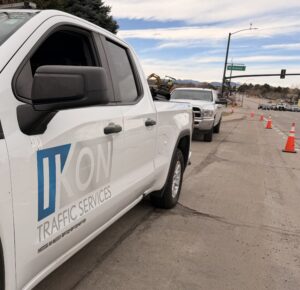
Not all work zones are created equal. In Douglas County, these areas tend to require more advanced planning:
- Parker Road (CO-83): High speeds + heavy commuter traffic
- Santa Fe Drive (US-85): Limited shoulder space and frequent congestion
- Downtown Castle Rock: Pedestrian-heavy with tight roadways
- Highlands Ranch arterials: High volume with strict community expectations
If your project touches any of these corridors, your traffic control plan needs to be especially precise.
How to Keep Your Project Moving
The difference between a smooth project and a delayed one often comes down to preparation.
Here’s how to stay ahead:
- Start your TCP early—before permit submission to Douglas County Public Works
- Work with a team that understands Douglas County requirements
- Plan for peak traffic impacts, not just average conditions
- Ensure your field crew follows the approved plan exactly
- Stay flexible—conditions can change quickly in active work zones
Partner with a Team That Knows Douglas County
Traffic control isn’t just about compliance—it’s about protecting your crew, your timeline, and your reputation.
At Ikon Traffic, we’ve worked across the Colorado Front Range and understand the unique demands of Douglas County projects. Whether you need a detailed Traffic Control Plan or full-service on-site traffic safety, we’re ready to support your team.
👉 Get started today: https://ikontraffic.com/contact/